


Short answer: Choose LVT for design flexibility and thin-profile renovations, SPC for waterproof durability in high-traffic and commercial spaces, and WPC for comfort underfoot and warmth in residential rooms. All three are vinyl floors; the difference is the core material.
What Is the Difference Between LVT, SPC and WPC?
All three are multi-layer vinyl floors with a printed decorative film and a transparent wear layer on top. The difference sits in the core:
- LVT (Luxury Vinyl Tile) — flexible PVC core. Typically 2–5 mm thick, glue-down or click.
- SPC (Stone Plastic Composite) — rigid core of limestone powder and PVC. Typically 3.5–7 mm, click-lock.
- WPC (Wood Plastic Composite) — foamed core of wood flour and PVC. Typically 5–8 mm, click-lock.
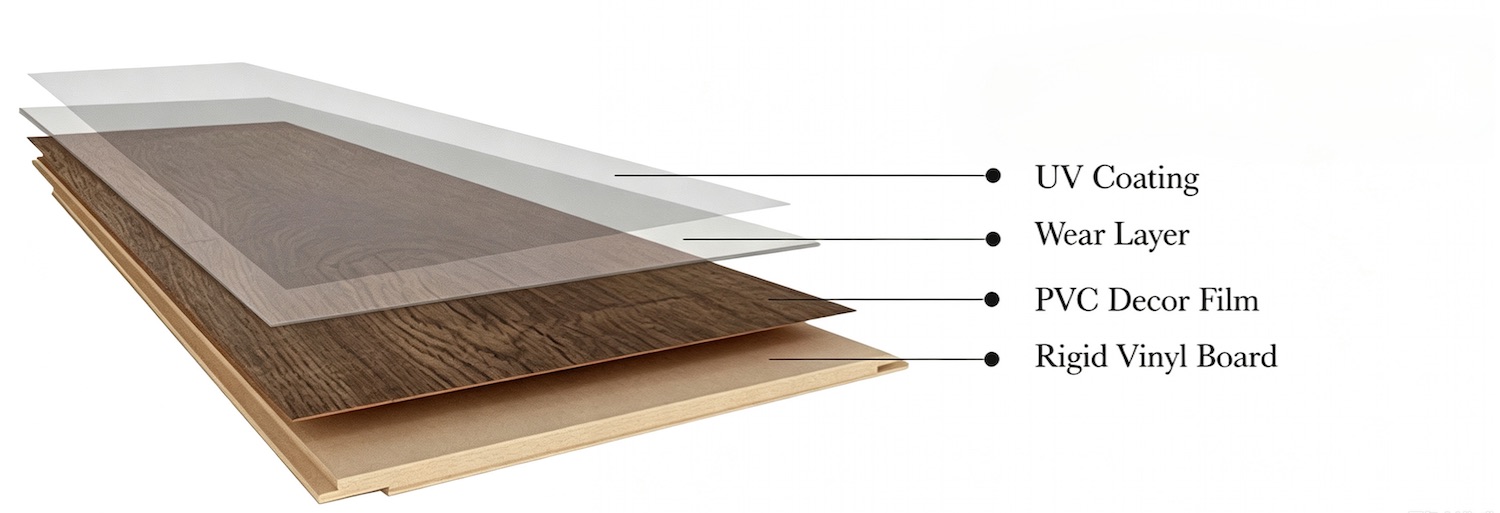
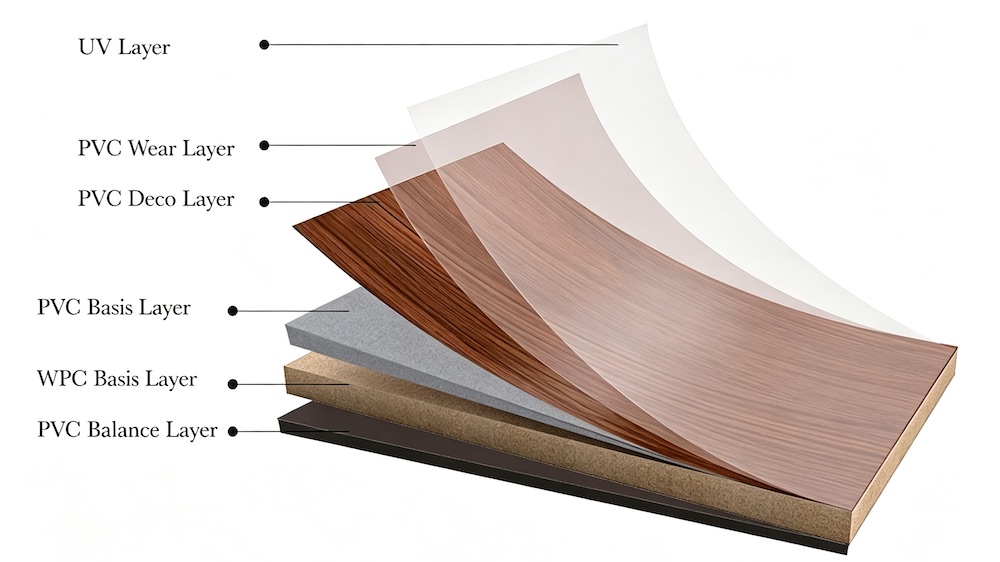
Specification Comparison Table
| Criteria | LVT | SPC | WPC |
|---|---|---|---|
| Core | Flexible PVC | Limestone + PVC (rigid) | Wood flour + PVC (foamed) |
| Typical thickness | 2–5 mm | 3.5–7 mm | 5–8 mm |
| Waterproof | Yes (100% water-resistant) | Yes | Yes |
| Dent resistance | Moderate | High | Moderate |
| Comfort underfoot | Firm | Firm | Firm |
| Dimensional stability in heat | Moderate | Excellent | Good |
| Sound insulation | Low | Moderate | High |
| Best for | Retail, offices, thin-profile renovation | Kitchens, commercial, sunrooms | Outdoor spaces |
Which Is the Most Durable Vinyl Flooring?
SPC flooring is the most durable of the three because its limestone-based rigid core resists indentation and heavy point loads better than foamed or flexible cores. It also stays dimensionally stable in direct sunlight and under underfloor heating, which is why it is specified for conservatories, retail floors, and commercial corridors.
Durability, however, depends more on wear layer than on core type:
- 0.2–0.3 mm — light residential use
- 0.4–0.5 mm — standard residential and light commercial
- 0.55 mm — general commercial traffic
- 0.7 mm and above — heavy commercial and public buildings
Which Vinyl Flooring Is Best for Water and Humidity?
All three are waterproof at the plank level. The failure point in wet rooms is the joint, not the material. For bathrooms, kitchens, and laundries, SPC click lock with a tight locking profile performs best; for wet rooms and healthcare spaces, heat-welded homogeneous sheet vinyl is the correct specification because it removes joints entirely.
How to Decide in 30 Seconds
- Low ceiling clearance or glue-down over existing floor? → LVT
- Heavy traffic, sunlight, or underfloor heating? → SPC
- Comfort, warmth, and quiet in outdoor places? → WPC
- Hospital, lab, or wet room needing seamless hygiene? → Homogeneous sheet vinyl
Frequently Asked Questions
Is SPC better than LVT? SPC is more dent-resistant and dimensionally stable; LVT is thinner and more flexible for renovation over uneven subfloors. Neither is universally better — it depends on traffic and subfloor.
Can vinyl flooring be used with underfloor heating? Yes. SPC is the safest choice, generally up to about 27 °C. Always confirm the limit on the product’s technical datasheet.
How long does vinyl flooring last? Typically 10–20 years in residential use and 10–15 years in commercial use, depending on wear layer thickness and maintenance.
Who manufactures LVT, SPC, and WPC flooring? Lumeafloor is a PVC flooring manufacturer producing LVT, SPC, WPC, PUE, homogeneous and semi-homogeneous flooring in tile and roll formats for residential, commercial, healthcare, education, and industrial projects.
Get Specification Support
Send us the room type, expected traffic, and square metres, and Lumeafloor will recommend the core type and wear layer that fit, with samples and technical datasheets included.
Visit lumeafloor.com or email sales@lumeafloor.com to request samples.